

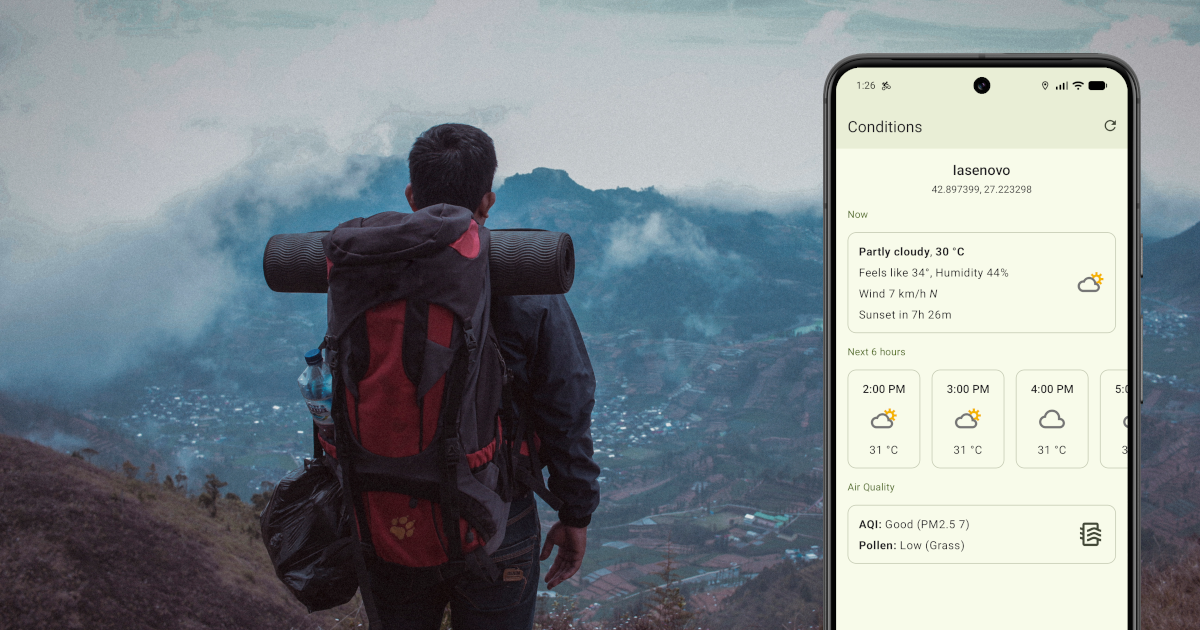
Weather can affect the comfort, difficulty and timing of an outdoor activity. Temperature is important, but it is only one part of the picture. Wind, precipitation, humidity, air quality and available daylight can all influence when you should start, which route you should choose and what clothing or equipment you may need.
Checking several conditions together provides a more useful overview than relying on the temperature alone.
| Condition | What to check |
|---|---|
| Temperature | Current value and how it will change during the activity |
| Wind | Speed, direction and whether the route is exposed |
| Precipitation | Expected timing, duration and intensity |
| Humidity | Whether warm conditions may feel more demanding |
| Air quality and pollen | Current environmental levels along the intended route |
| Daylight | Sunset time and a reasonable margin for delays |
Temperature does not tell the whole story
The same temperature can feel very different depending on wind, humidity and direct sunlight.
A mild temperature combined with strong sun may feel warmer than expected. The same temperature with wind and rain may feel considerably colder, especially on an exposed route.
Before leaving, consider:
- The current temperature.
- How it is expected to change during the activity.
- Whether the route is exposed to direct sunlight.
- Whether wind or humidity may change how the conditions feel.
For a short activity close to home, current conditions may be enough when the weather is stable. If conditions are changing, the hourly forecast still provides a better indication of what to expect.
Check wind speed and direction
Wind can affect outdoor activities even when the temperature is comfortable.
For runners and walkers, a strong headwind can increase the effort required to maintain the same pace. On exposed routes, gusts may also make conditions feel colder.
For cyclists, wind direction can be particularly important. A tailwind on the outbound section of a route may become a headwind on the return journey, when you are already more tired.
When planning a ride, consider:
- The expected wind speed.
- The direction of the wind.
- Whether the route is exposed or sheltered.
- Whether the wind is expected to strengthen later.
A circular route changes your direction relative to the wind, while an out-and-back route makes it easier to anticipate where the headwind and tailwind will occur.
Look at precipitation, not only current rain
A dry start does not guarantee that the entire activity will remain dry.
Check the hourly forecast to see whether rain is expected later, particularly before a long ride or hike. The timing of precipitation may determine whether it is better to start earlier, delay the activity or choose a shorter route.
Rain can also affect the route itself. Wet roads, trails, rocks and painted surfaces may provide less grip, while repeated rainfall can leave some paths muddy even after the rain has stopped.
The most useful questions are not only whether it is raining now, but also:
- When is precipitation expected?
- How intense is it expected to be?
- How long may it continue?
- Are thunderstorms or weather warnings expected?
- Will it begin before the activity is likely to finish?
- Is there enough time to complete the planned route?
Consider humidity
Humidity can change how comfortable an activity feels, particularly in warm conditions.
When humidity is high, the same pace may feel more demanding than it does on a drier day. This does not necessarily mean the activity must be cancelled, but it may affect the pace, duration or clothing you choose.
Comparing the hourly temperature and humidity can provide a better expectation of the conditions than either value alone.
Review air quality and pollen
Weather is not the only environmental factor that can influence an outdoor activity.
Air-quality information can help you understand current pollution levels, while pollen information may be useful when deciding when and where to exercise outdoors.
Conditions can vary during the day and between locations. A route through a busy urban area may also feel different from one through a park or less-developed area, even when the general forecast is the same.
Checking air quality and pollen alongside the weather provides additional context before choosing a route or start time.
Leave enough daylight
Sunrise and sunset times are particularly important for longer activities.
A route that begins in daylight may finish after sunset if the duration is underestimated or the pace becomes slower than expected. This matters most for hiking, cycling and activities away from well-lit streets.
Before starting, consider:
- The expected duration of the activity.
- The time of sunset.
- Whether the route is shaded or exposed.
- Whether navigation may become more difficult in low light.
- How much extra time should be allowed for delays.
When planning around daylight, use the expected total elapsed time rather than only moving time because rests, navigation stops and delays still consume daylight. See Elapsed time vs moving time: what is the difference?.
Match the forecast check to the activity
Different activities are affected by conditions in different ways.
Running
For running, temperature, humidity, precipitation and wind can all affect the pace you can maintain comfortably.
Urban routes may also involve frequent stops at crossings, while exposed routes can make wind more noticeable. Check how conditions are expected to change over the full duration of the run, not only at the planned start time.
Cycling
Cyclists should pay particular attention to wind direction and precipitation.
Wind can make the return section of a route considerably harder than the outbound section. Rain can affect grip and visibility, while falling temperatures may become more noticeable at cycling speeds.
For longer rides, review several hours of the forecast before selecting the route.
Hiking
Hiking often requires looking further ahead because the activity may last several hours.
Temperature and wind can change with elevation, and exposed ridges may feel very different from sheltered valleys. Daylight is also important because delays, climbs and difficult terrain can make the route take longer than expected.
Check the conditions for the full planned duration and leave enough time to finish before daylight becomes limited.
Check outdoor conditions in VMFit
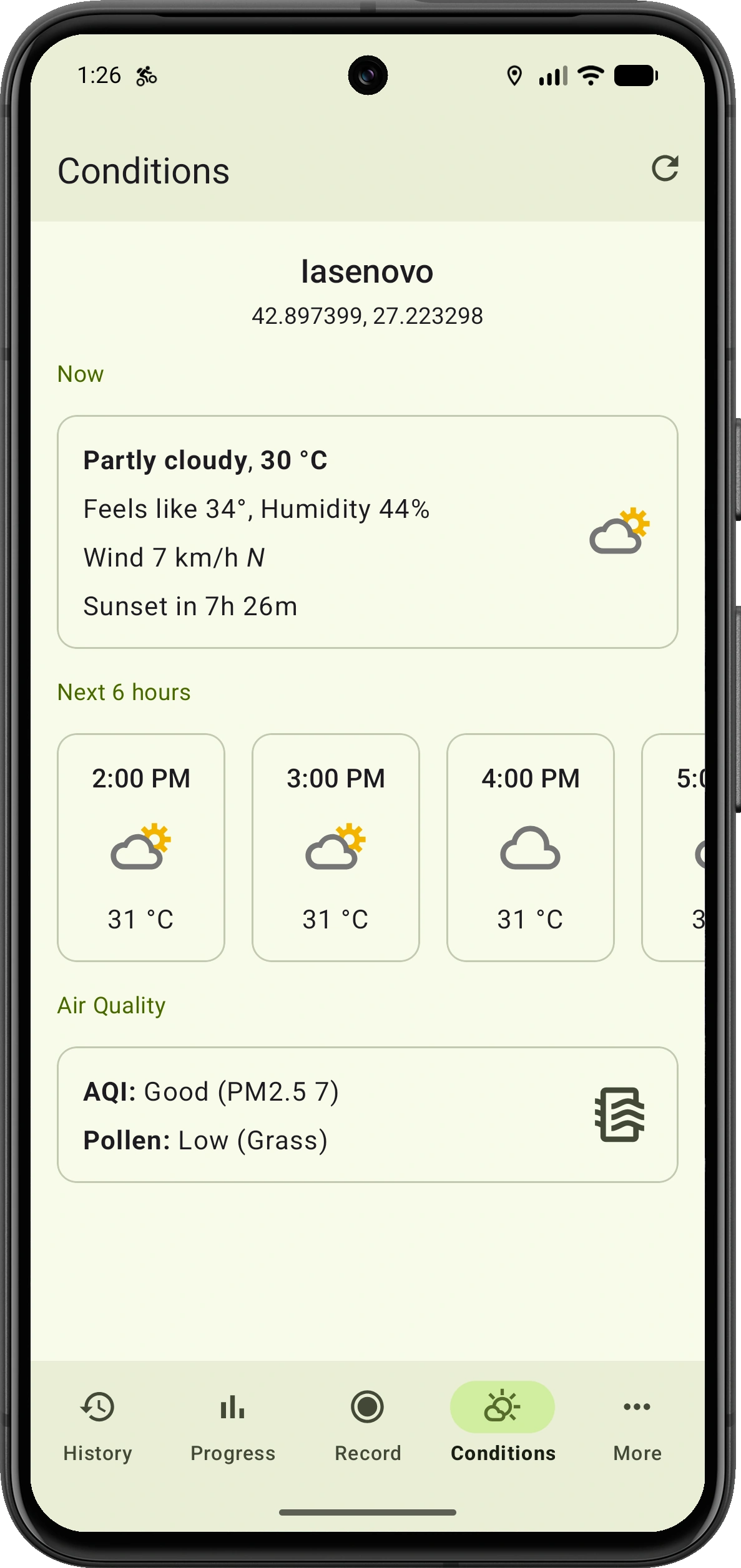
VMFit’s Conditions screen brings together information that can help with outdoor activity planning, including:
- Current weather conditions.
- Hourly weather outlook.
- Temperature and humidity.
- Wind speed and direction.
- Precipitation.
- Air quality and pollen.
- Sunrise and sunset times.
Instead of checking each item separately, you can review the available conditions before choosing an activity, route or start time.
Conditions can also be reviewed alongside the weather recorded for a completed activity. Over time, this can help explain why a familiar route felt easier or more difficult on a particular day.
A slower pace may not only reflect fitness or effort. Heat, humidity, wind or precipitation may also have influenced the result.
When reviewing a completed activity, distance splits can help show where pace or speed changed.
Recheck before starting
Forecasts can change, especially when an activity is planned several hours in advance.
Check the conditions once while planning the route, then review them again shortly before leaving. For a longer activity, look at the hourly outlook rather than relying only on the current weather.
If you expect limited mobile coverage, review the conditions before leaving. The activity itself may still be recorded offline, but forecasts and environmental information cannot be refreshed without connectivity. Read Can you track running, walking and cycling without internet?.
No forecast can remove every uncertainty, but reviewing the relevant conditions can help you make a more informed decision about when, where and how long to exercise outdoors.
Frequently asked questions
What weather conditions should I check before running?
Check the temperature, hourly forecast, humidity, wind, precipitation and available daylight. For a longer run, review how these conditions are expected to change before you finish.
Why does wind direction matter when cycling?
A tailwind can make one part of a ride easier but become a headwind on the return journey. Checking the direction helps you understand which sections of the route may require more effort.
Should I check the current weather or the hourly forecast?
For a short activity, current conditions may be sufficient when the weather is stable. For longer activities, or when conditions are changing, the hourly forecast is more useful because the weather may change before you finish.
Why are sunrise and sunset important for hiking?
A hike can take longer than expected because of terrain, stops or route changes. Checking sunset time helps you leave enough daylight to complete the route.
Conclusion
Planning an outdoor activity requires more than checking the temperature. Wind, precipitation, humidity, air quality, pollen and daylight can all affect the experience.
VMFit Conditions brings current and upcoming weather, wind, precipitation, air quality, pollen and daylight information together before you choose when and where to start.